During a seasonal heatwave across Scotland, HF’s HVACR team was deployed on a rapid-response reactive call-out for our valued client, MyDentist. One of their busy regional dental practices reported a complete loss of cooling across multiple active surgeries and the main patient waiting area. Operating in a clinical healthcare environment, the resulting temperature spike directly threatened daily operations, patient comfort, and strict clinical compliance.
Our engineers quickly attended the site, diagnosed a critical dual-component system fault, executed immediate structural repairs, and completely re-engineered the system’s refrigerant volume. By correcting historical installation errors, we restored full climate control and significantly optimised the entire system’s operational efficiency.
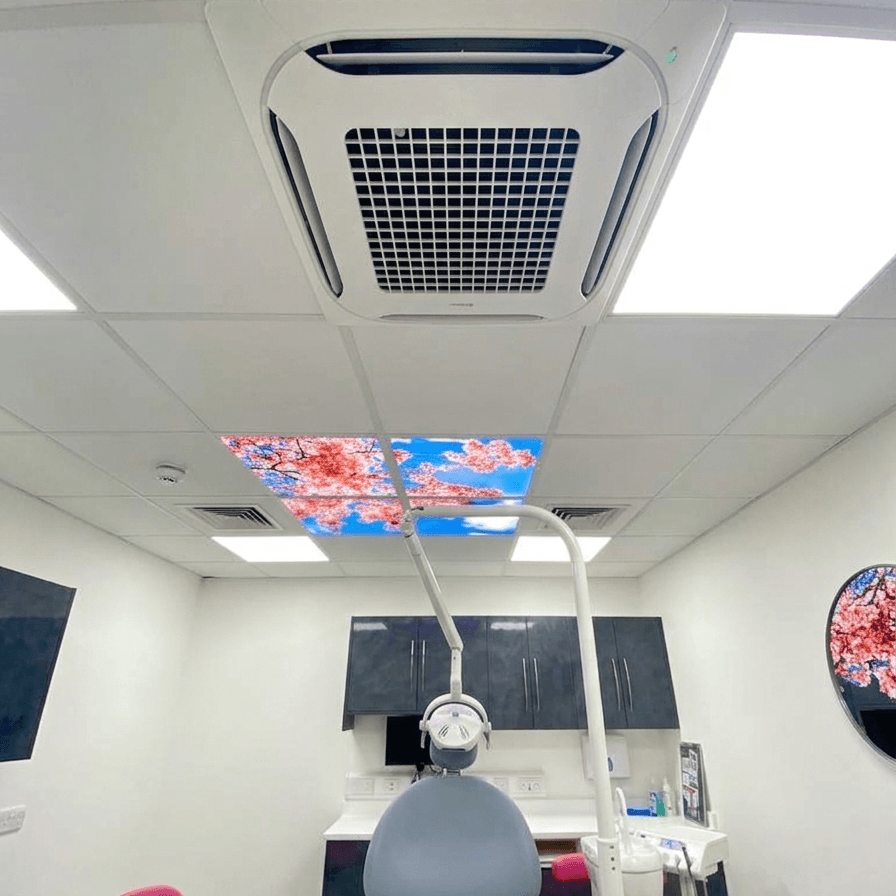
Maintaining a stable, climate-controlled environment is vital for clinical dental practices to ensure patient comfort during treatment and safeguard sensitive medical equipment. Faced with a sudden loss of air conditioning, the MyDentist team required a fast, highly compliant solution to prevent operational downtime.
The Challenge
Upon arrival at the live medical practice, our HVACR engineers initiated a comprehensive system diagnostics check to identify the root cause of the cooling failure. The investigation revealed two major issues:
- Active Refrigerant Leaks: The primary cause of the immediate failure was a leaking flare connection spanning two separate cooling units, which had led to a severe loss of system refrigerant.
- Historical Installation Deficiencies: Upon auditing the original commissioning paperwork left by the initial installation company, our team discovered a major legacy oversight. The installers had failed to calculate or document the required “additional refrigerant charge” for the extended pipe runs. As a result, the system had been running significantly short of gas since its original installation, making it highly inefficient and placing undue mechanical strain on the compressors.
The Solution
Our F-Gas certified engineers executed a swift, multi-stage recovery and repair strategy:
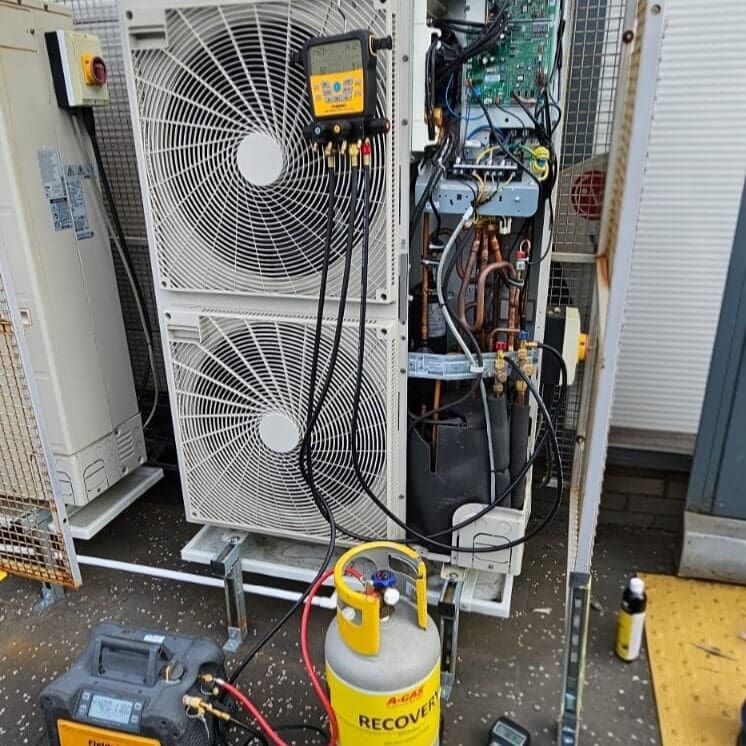
- Safe Refrigerant Recovery: In full compliance with statutory environmental regulations, our team safely recovered the remaining circuit refrigerant to prevent any atmospheric release.
- Flare Connection Repair & Pressure Testing: The compromised flare connections were cut out, re-engineered, and structurally repaired. We then subjected the system to a rigorous high-pressure strength test using oxygen-free nitrogen to verify absolute circuit integrity.
- Volumetric Charge Calculation: To remedy the original installer’s error, our engineers meticulously metered out the entire length of the internal pipe runs and cross-referenced the precise pipe diameter sizing. Using this technical data, we calculated the exact volume of additional gas required for optimal performance.
- Re-Commissioning with Fresh R32: The repaired system was evacuated to a deep vacuum and re-commissioned by introducing the precise, metered volume of fresh, eco-friendly R32 refrigerant required for the complete system footprint.
The Result
All engineering works were completed within a highly compressed turnaround window, entirely mitigating long-term disruption for the practice.
The results delivered an immediate, measurable improvement:
- Restored Clinical Comfort: Full, reliable climate control was returned to the surgeries and waiting areas, significantly improving the environment for both staff and waiting patients.
- Optimised Energy Efficiency: By correcting the systemic under-charging left by the original installers, the air conditioning network no longer works under excessive strain. The system now operates in its sweet spot, delivering maximum cooling output while substantially slashing the practice’s daily energy consumption.
- Asset Lifecycle Protection: Eliminating the leaks and balancing the refrigerant volume protects the sensitive internal components from premature failure, lowering the club’s long-term maintenance overheads.
The Importance of Post-Install Auditing
This project highlights why it is absolutely crucial to scrutinize original commissioning paperwork rather than just treating the surface-level symptom. A standard leak repair would have left this system running short of gas, inefficiently, and prone to another breakdown. By checking the layout from the ground up, measuring the pipe runs, and calculating the exact volumetric requirements, we ensured the client received the most energy-efficient operating conditions possible.