Why Sufficient and Maintained Smoke Vents are Critical to Your Fire Risk Assessment
Fire & Security, InformationThe Unseen Guardian
For Responsible Persons, Facilities Managers, and Building Owners across Scotland, a Fire Risk Assessment (FRA) is more than just a piece of paperwork, it is the foundational document for all fire safety systems within your property. This crucial assessment dictates the measures required to protect life and property.
At HF Fire & Security, we specialise in providing the active Fire and Security Services that underpin a satisfactory FRA score. Central to this is the design, installation, and maintenance of Smoke Vent Systems (Automatic Opening Vents or AOVs), which we deliver with pride as an SDI 19 accredited contractor. In the face of a fire emergency, these systems are the unseen guardians that ensure safe evacuation and minimise fire damage.
The Fire Risk Assessment (FRA): Your Legal Mandate
Under the Regulatory Reform (Fire Safety) Order 2005 (RRO), every building owner, employer, or occupier (the Responsible Person) must carry out a comprehensive Fire Risk Assessment. In Scotland, this is governed by the Fire (Scotland) Act 2205 and the Fire Safety (Scotland) Regulations 2006.
The Five-Step Assessment Process:
A Fire Risk Assessment follows a methodical five-step process:
- Identify Fire Hazards: Pinpointing ignition sources (electrical faults, heating, smoking materials) and fuel sources (combustible materials, furniture, storage).
- Identify People at Risk: Considering all occupants, especially those who may be vulnerable (the elderly, children, those with disabilities), and those in remote or high-risk areas.
- Evaluate, Remove, or Reduce the Risks: Comparing existing fire protection measures against the identified risks and making recommendations for improvement.
- Record, Plan, Instruct, and Train: Documenting findings, creating a detailed emergency plan, and providing staff training.
- Review and Update: Regularly checking and revising the FRA, especially after any significant structural, occupancy, or process changes.
The Role of Means of Escape
Step 3 is where Smoke Ventilation Systems become critically important. The assessment must confirm that the means of escape (escape routes, stairwells, lobbies) are protected, allowing occupants to reach a place of safety quickly and easily. This is where smoke—which causes the vast majority of fire-related deaths—poses the greatest threat. The primary objective of any Fire Risk Assessment is the protection of life, and this hinges on maintaining clear evacuation existence spaces.
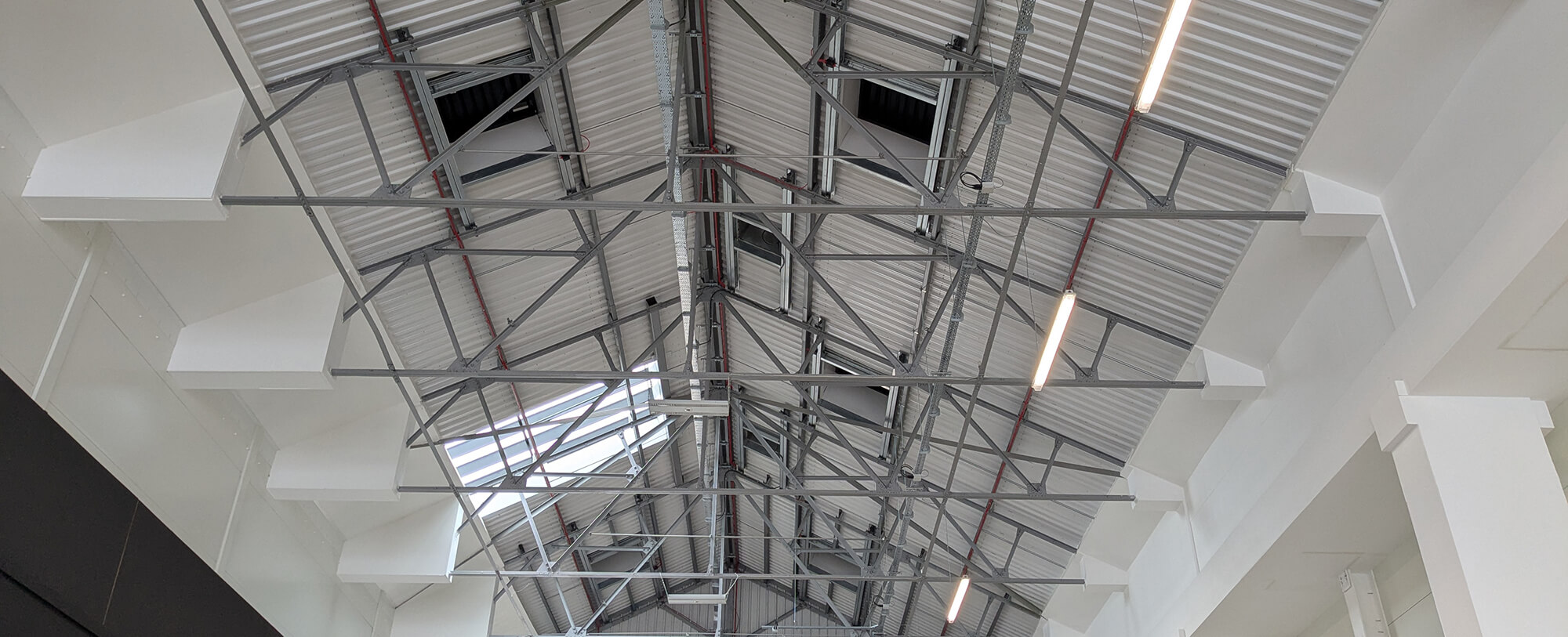
Smoke Vents: The Life-Saving Bridge in Your FRA
A Fire Risk Assessment is fundamentally about managing risk likelihood and risk severity. A well-designed, compliant Smoke Vent System drastically reduces the severity component by addressing the key life-threat posed by smoke and heat.
How Smoke Vents Directly Impact the Risk Score:
Smoke Vents provide life safety benefits in three key areas, directly mitigating hazards that would otherwise increase your FRA’s severity rating:
Mitigation of Toxic Smoke & Visibility Loss: Smoke Vents operate using natural buoyancy, creating a smoke reservoir and maintaining a clear, breathable air layer in escape routes (stairwells, corridors). This is a SIGNIFICANT REDUCTION in risk, as it ensures occupants can see and breathe, preventing panic and enabling safe evacuation. The clearance of smoke is essential for maintaining the functionality of the means of escape.
Control of Heat Build-up & Flashover: Automatic Opening Vents (AOVs) release hot gases and heat, reducing the temperature within the building. This provides a REDUCED RISK of catastrophic structural damage by delaying or preventing flashover, protecting both occupants and the building structure from extreme damage.
Support for Firefighter Access: Clear ventilation helps Fire and Rescue Services (FRS) gain safer and faster access to the fire seat. This leads to IMPROVED FRS OPERATIONS, allowing for quicker fire fighting, containing the incident, and limiting fire damage to property.
In multi-storey buildings, residential blocks, and commercial premises with long travel distances, a fully functional Smoke Control System is often the primary engineered solution specified to meet the requirements of standards like BS 9999 and Approved Document B (Fire Safety). Failure to install or maintain this system means the building’s entire fire strategy is compromised, resulting in an Intolerable Risk score on the FRA.
The Imperative of Sufficiency and Adequacy
An assessor doesn’t just check if you have a smoke vent; they assess if the system is sufficient and adequate for the building’s specific design and use. This due diligence is critical for fire protection.
Adequacy of Design
The Aerodynamic Free Area (AFA)—the effective opening size required for smoke and heat to escape—is a precise calculation based on the smoke reservoir size, the building height, and the fire load.
Non-Compliant Systems: A system installed without proper engineering calculations or using non-certified components may visually appear correct but fail to extract the required volume of smoke, rendering it inadequate and resulting in a failure on the FRA.
EN 12101 Compliance: All vents must comply with the harmonised European standard EN 12101-2 for Smoke and Heat Exhaust Ventilators (SHEVs), proving they are capable of withstanding heat and environmental loads and will open reliably. This certification is a cornerstone of fire safety systems.
The SDI 19 Accreditation Difference
To ensure sufficiency and adequacy, the Responsible Person must appoint a competent person for installation and maintenance. This is where HF Fire & Security’s SDI 19 accreditation is a crucial differentiator for effective Fire and Security Services.
SDI 19 is the certification scheme developed by the Smoke Control Association (SCA) and IFC Certification. It verifies that a contractor is competent in the design, installation, commissioning, and maintenance of smoke control systems.
By using an SDI 19 accredited company:
Design Integrity is Guaranteed: We verify the original Fire Strategy and ensure the installed system meets the exacting standards required for your FRA.
Installation is Flawless: Systems are installed using CE/UKCA marked components and rigorous quality control, preventing common issues like actuator failures or compromised wiring that would lead to FRA failure.
The ‘Golden Thread’ is Maintained: We provide comprehensive documentation for the system’s entire lifecycle, which is increasingly mandatory for compliance, particularly in residential blocks, ensuring the integrity of your smoke vent installation.
Maintenance: The Non-Negotiable Compliance Requirement
A perfectly installed Automatic Smoke Vent System is a complex electro-mechanical safety apparatus. Like any life-safety system, its performance can degrade over time due to dust, debris, corrosion, or electrical faults. A maintained system is a compliant system. Consistent smoke vent maintenance is key to longevity and reliability.
Legal and Standard Requirements
The RRO and supporting British Standards are clear: Fire Safety Equipment must be maintained in an efficient state, in efficient working order, and in good repair.
BS 7346-8: This code of practice specifies that smoke vent maintenance should be carried out by a competent person at least twice per year (bi-annual servicing).
The Responsible Person’s Duty: The Responsible Person must log all maintenance, tests, and repairs in the Fire Safety Logbook. An FRA assessor will specifically check these records. A lapse in maintenance is considered a serious breach of the RRO and will flag your building as high-risk, completely undermining your fire protection strategy.
HF Fire & Security’s Proactive Maintenance Contracts
Our Fire and Security Services extend beyond installation. Our Smoke Vent Servicing contracts are designed to proactively meet and exceed all legal and regulatory standards:
Bi-Annual Functional Testing: We test all components, including the control panel, power supplies, battery backups, detectors, and the physical vent actuators.
Cause & Effect Verification: We verify that the system logic (i.e., when the smoke detector goes off, the correct vent/actuators open) remains functional and aligns with the original Fire Strategy.
Emergency Repair: We offer a rapid response service to rectify any fault immediately, ensuring minimal time where your building is exposed to an unmitigated fire risk.
Failure to maintain is a failure of your Fire Risk Assessment. If a non-maintained system fails to operate during an emergency, and smoke fills the escape routes, the Responsible Person can face severe legal penalties, including prosecution and fines, due to a breach of their duty concerning life safety.
Investing in Life Safety and Compliance
The relationship between your Fire Risk Assessment and your Smoke Vent Systems is one of mutual dependency. The FRA determines the necessity of the system, and the system’s adequacy and maintenance determine the safety rating of your FRA.
At HF Fire & Security, we provide the expertise and certified assurance required to satisfy the most stringent Fire Risk Assessment criteria. Our SDI 19 accredited service covers everything from bespoke smoke vent design to routine smoke vent maintenance, ensuring your Commercial, Industrial, or Residential property in Scotland remains safe and fully compliant. We deliver reliable fire safety systems for effective safe evacuation.
Don’t let an unmaintained or non-compliant Smoke Control System compromise your Fire Safety.
Contact HF Fire & Security today to ensure your Fire Risk Assessment reflects a truly safe and protected environment. Would you like us to provide you with a quote for a new smoke vent system or maintenance contract?

LATEST NEWS
Stores & Purchasing Co-ordinator – JOB ID – HF48
HF Group is one of the UK’s leading multi-discipline building services contractors, delivering high-quality solutions across Electrical, Mechanical, Fire & Security, Telecommunications, and Automated Controls. With a legacy spanning over 3 centuries and a family culture, we consider all of our employees as part of the family and invaluable assets to our ongoing business. Our […]